
From Emergency Response to Teaching Model: How Charles University Built Digital Microscopy Across Five Faculties
“What started from necessity became something sustainable and meaningful”
When traditional microscopy teaching stopped being possible overnight, Charles University faced a question many medical schools were suddenly asking: how can visual, microscope-based training continue without the classroom? Over the following years, the Faculty of Medicine developed a digital teaching model that expanded from a single implementation to daily use across all five faculties. The result is a success story about how digital microscopy can change the way medical students learn.
What began as an emergency response during the Corona pandemic became something much more lasting. For MUDr. Tomáš Soukup, Ph.D. and MUDr. Petra Kašparová, Ph.D., who helped shape this development over more than five years, the core question was never simply how to move slides online. The real challenge was building a teaching environment that would remain useful, structured, and educationally meaningful beyond the crisis.
A crisis that accelerated a bigger shift
According to Soukup, the decisive push came when in-person teaching and assessment could no longer be taken for granted. Histology and pathology are built around visual training, repetition, and guided interpretation. “The real turning point came during the COVID period,” Soukup explains. “We had to find a way to continue teaching histology and pathology, including practical microscopy and examinations, even when students were learning remotely.”
What emerged from that period was not just a stopgap solution. As the team worked more intensively with digital microscopy, they saw that it could support teaching beyond continuity under pressure. It could help students prepare more independently, revisit material more easily, and connect learning materials in a more structured way.
INTERVIEW PARTNER
MUDr. Petra Kašparová, Ph.D.
Pathologist
Fingerland Department of Pathology
Charles University Czech Republic
E-mail: kasparovap@lfhk.cuni.cz
Phone: +420 (495) 832-287
From one setup to a shared university model
Slides, course structures, and teaching experience were shared across departments and faculties. What started as a local digital environment gradually developed into a broader academic model. Adoption accelerated as colleagues saw not just the platform itself, but how it was used in teaching.
Today, digital microscopy with SmartZoom® ClassRoom is part of daily teaching practice across all five medical faculties of Charles University. It turns the case from an interesting pilot into a reference point for other universities considering similar steps.
Built around the way students actually learn
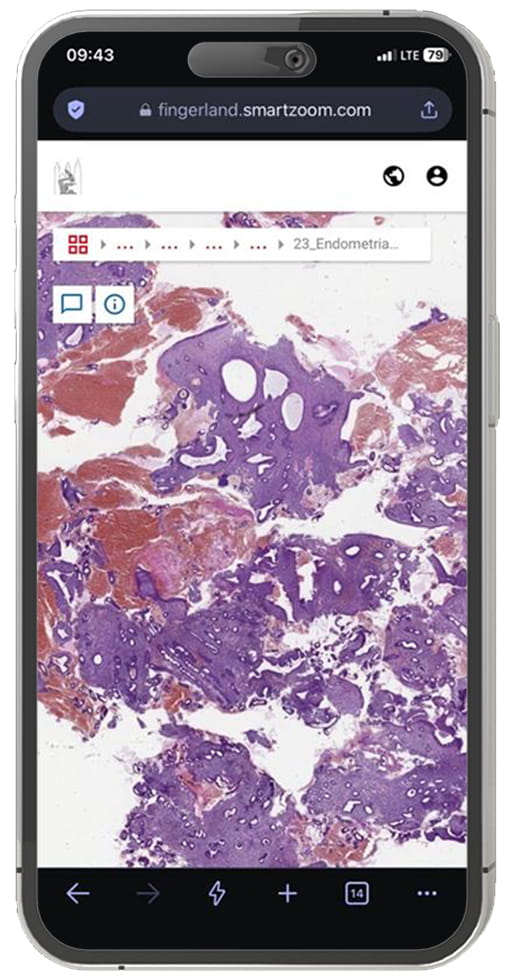
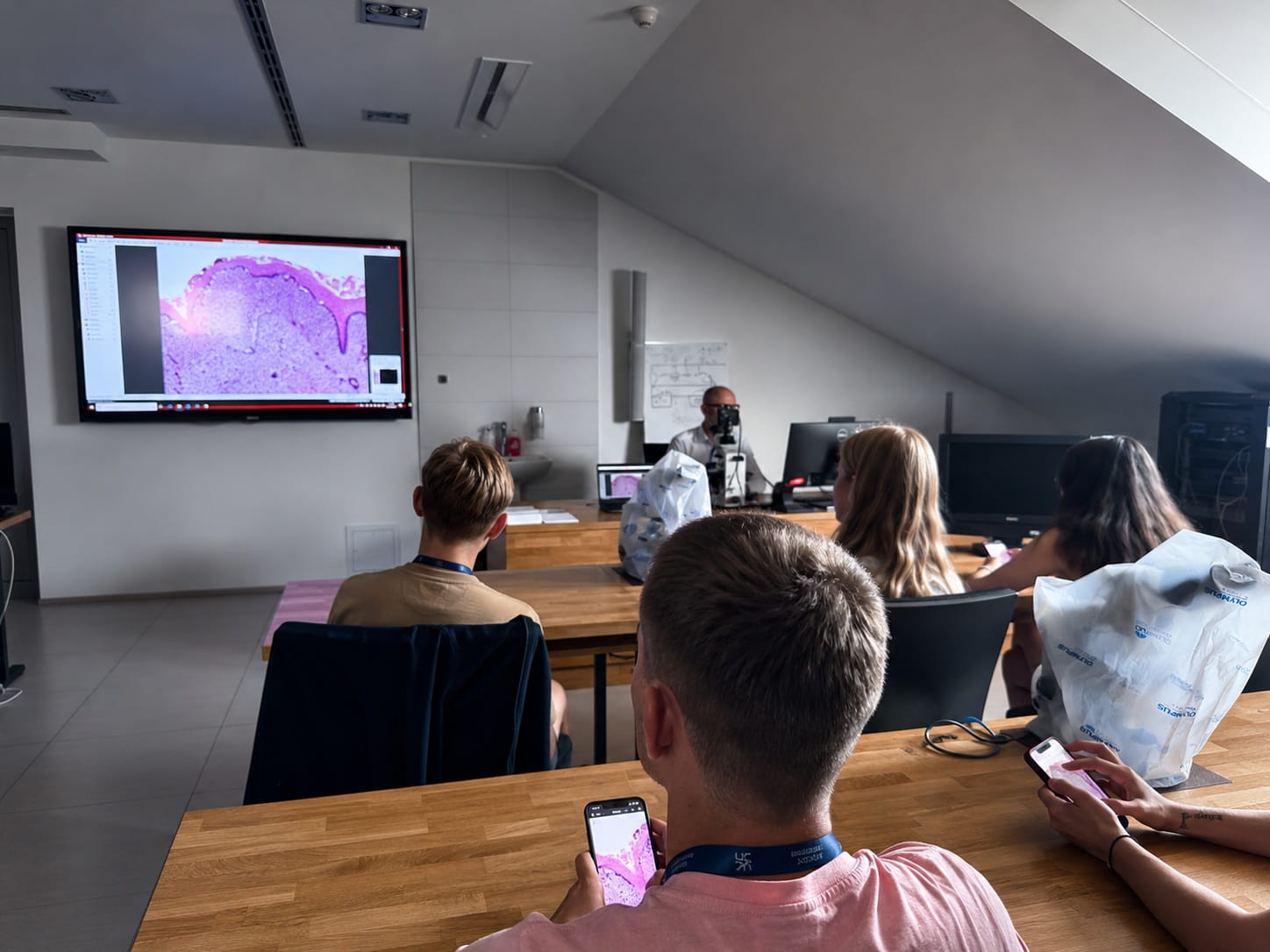
The key message from Charles University: digital teaching worked because it was aligned with real study behaviour. Students use the platform on tablets, laptops, smartphones, and desktop computers. They move through the learning materials, topic by topic, often using digital slides alongside video-based teaching. They can stop, revisit, compare, and reorient themselves at their own pace.
According to Soukup, this is particularly important in histology, where repeated visual exposure is essential to learning. “Our students are especially using their iPads and tablets,” he says. “This is the most frequently visible technology in their hands during the practical classes, as well as when they prepare themselves for the final exams.”
Instead of relying solely on what they see in a single practical session, students can return to the same structures, work more independently, and build visual confidence over time.
More than digital slides
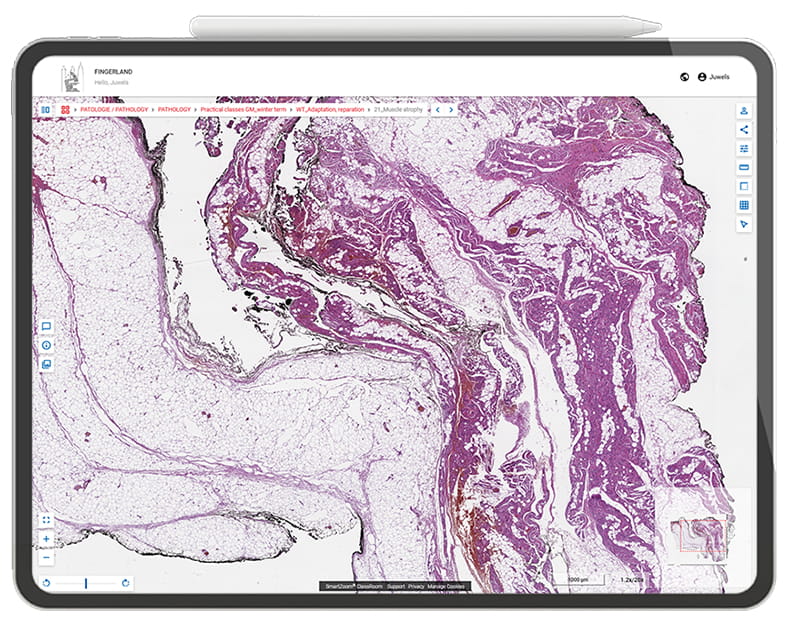
SmartZoom® serves as a browser-based digital teaching environment in which institutions can combine high-resolution medical images with annotations, explanatory texts, videos, audio, quizzes, and structured courses. The university’s implementation shows what that can look like in practice: not a generic template, but an environment filled with faculty-created content and tailored to its learning objectives.
“The platform is much more than just a slide viewer,” Kašparová says. “We can combine slides with annotations, explanatory materials, texts, videos, and additional teaching content in one place.” This makes the platform educationally stronger than a simple image archive. It supports guided learning, independent review, and richer contextual understanding — all of which matter in subjects that depend heavily on visual interpretation.
Connecting disciplines, not isolating them
A core strength is the way it connects different types of medical content. Over time, the digital teaching environment was expanded beyond histology into pathology and interdisciplinary case-based learning. The faculty integrated radiological images and ultrasound material alongside histological content, allowing to compare different modalities in one single educational setting.
In Kašparová’s view, that interdisciplinary dimension is one of the platform’s most important advantages. “In medicine, students should not learn these things in isolation,” she says. “It is very useful for them to compare histological and radiological images directly and understand how different perspectives relate to each other.”
That is more than a feature. It reflects a specific educational philosophy: medical understanding becomes stronger when students learn to connect information across formats and disciplines rather than consume it in separate silos.
Digital model complements the microscope
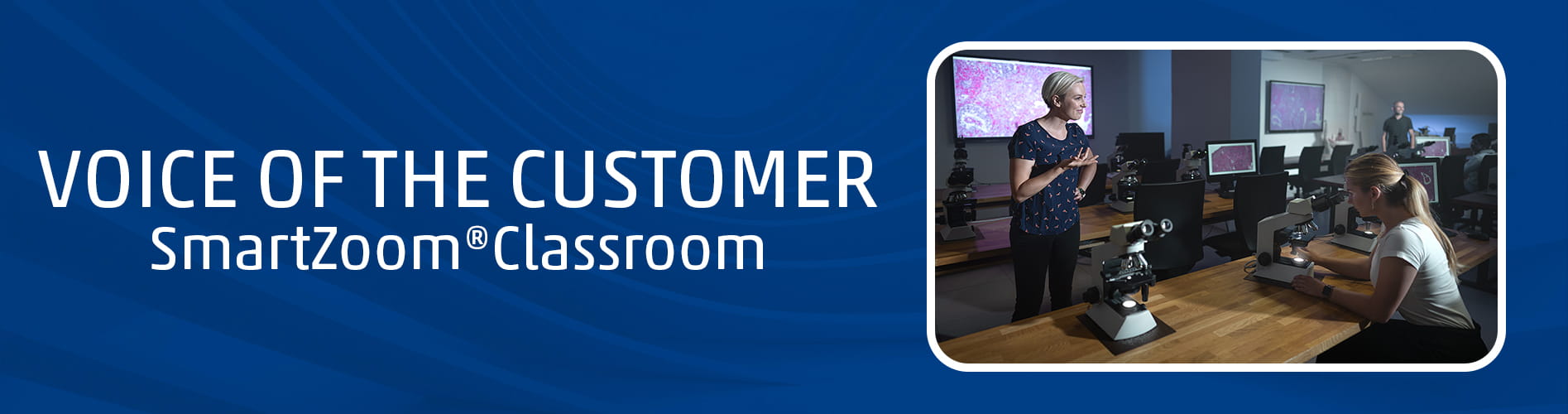
Digital microscopy was not introduced as a simplistic replacement for conventional microscopy. Students still work with traditional microscopes and physical slide boxes in practical classes. Alongside this, they also have access to a digital version of the slide collection, allowing them to compare what they see under the microscope with a high-quality digital reference and continue studying after class.
That blended model appears to have been one of the key reasons the concept proved persuasive internally. It did not ask educators to abandon established teaching methods. It strengthened them.
Soukup points to this as a turning point in broader adoption. When colleagues at another faculty saw the digital version of the slide box in practice, they immediately understood its value for students and began building their own implementation.
Real users helped shape the platform
The faculty did not simply consume a finished product. The team actively contributed to its refinement. According to both speakers, there was a continuous exchange with Smart In Media based on practical teaching needs. Feedback, ideas, and use cases from everyday academic work informed the platform‘s further development.
“That was very valuable,” Kašparová says. “Some functions developed further precisely because practical needs came up during everyday teaching.”
This gives the story a level of credibility many customer references lack. The value of the platform is not expressed through generic praise, but through a clear pattern of use, iteration, and co-development.
INTERVIEW PARTNER
MUDr. Tomáš Soukup, Ph.D.
Teaching assistant
Department of Histology and Embryology
Charles University Czech Republic
E-mail: soukupto@lfhk.cuni.cz
Phone: +420 (606) 343 553
What changed for students and teachers
Digital microscopy made learning more accessible. It allowed students to prepare more flexibly, review more thoroughly, and engage more actively with visual material. It made it easier to structure teaching resources and connect them across formats. It also supported hybrid teaching when students could not always be physically present.
For educators, it created a more adaptable teaching environment. For students, it created a more repeatable and interactive way of learning.
Looking back, Soukup sees that shift clearly. “What started from necessity became something sustainable and meaningful,” he says. “We did not just keep teaching running — we created something that improved it.”
Kašparová cites the scale of adoption as evidence that the concept has moved beyond experimentation. “It is now used across all five faculties,” she says. “That shows that the concept is not only interesting but truly works.”
What other institutions can learn
For other universities, teaching institutes, and professional societies, the Charles University case offers a practical lesson: successful digital microscopy teaching is not built by uploading slides alone.
It requires educational clarity, long-term commitment, and a platform flexible enough to support real teaching workflows, not just digital storage. It also requires institutions to think beyond isolated pilots and treat digital teaching as infrastructure that can evolve over time.
That is what makes Charles University’s experience so relevant. It is not simply a story of adoption. It is a story of how a university translated urgent need into a scalable academic model — and created a learning environment that many others can study closely.